From the Coromandel Coast to Gajah Berang: how the community began, and how it has kept its identity.
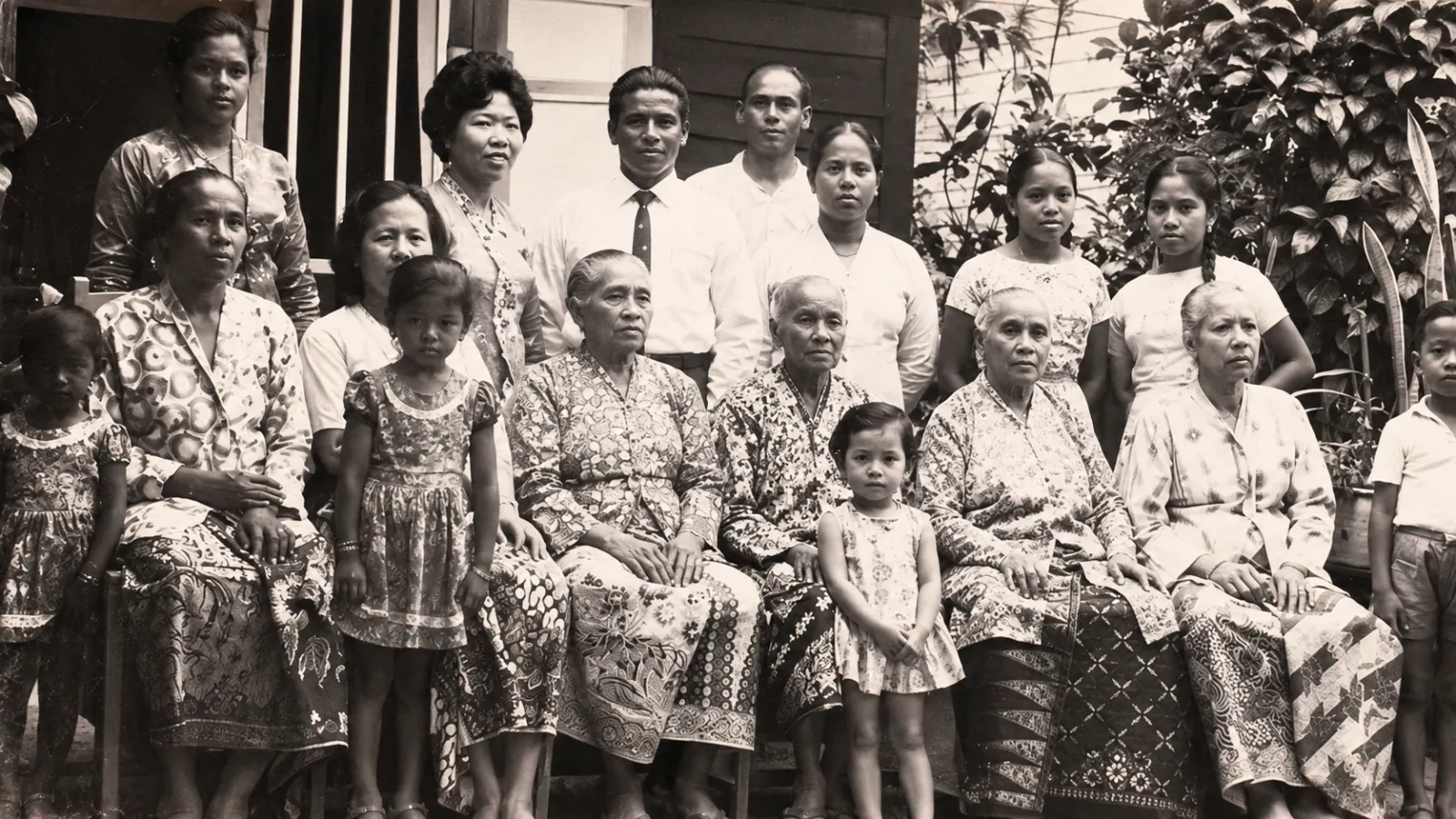
A Melaka Chetti family portrait, from the community’s archives
The land of the Chola
The Melaka Chetti, also known as Malacca-born Hindus or Chitty Melaka, trace their roots to Indian merchants from the Coromandel Coast in south-eastern India. The name Coromandel comes from the Tamil Chola Mandalam, “Land of the Chola”, one of the longest-ruling dynasties in southern Indian history.
Indian merchants are believed to have sailed the Malay Archipelago long before Melaka existed. In the 8th century the Srivijaya kingdom of Palembang controlled the region’s major ports and spread Saivism and Vaishnavism along them.
Melaka and the monsoon trade
Melaka was founded by Parameswara, a Hindu prince who had fled Palembang. Its position made it a natural stop for merchants waiting out the monsoons. As trade flourished, Indian merchants built their own settlement and married into local families: Orang Laut Malays, Chinese, Javanese and Bataks.
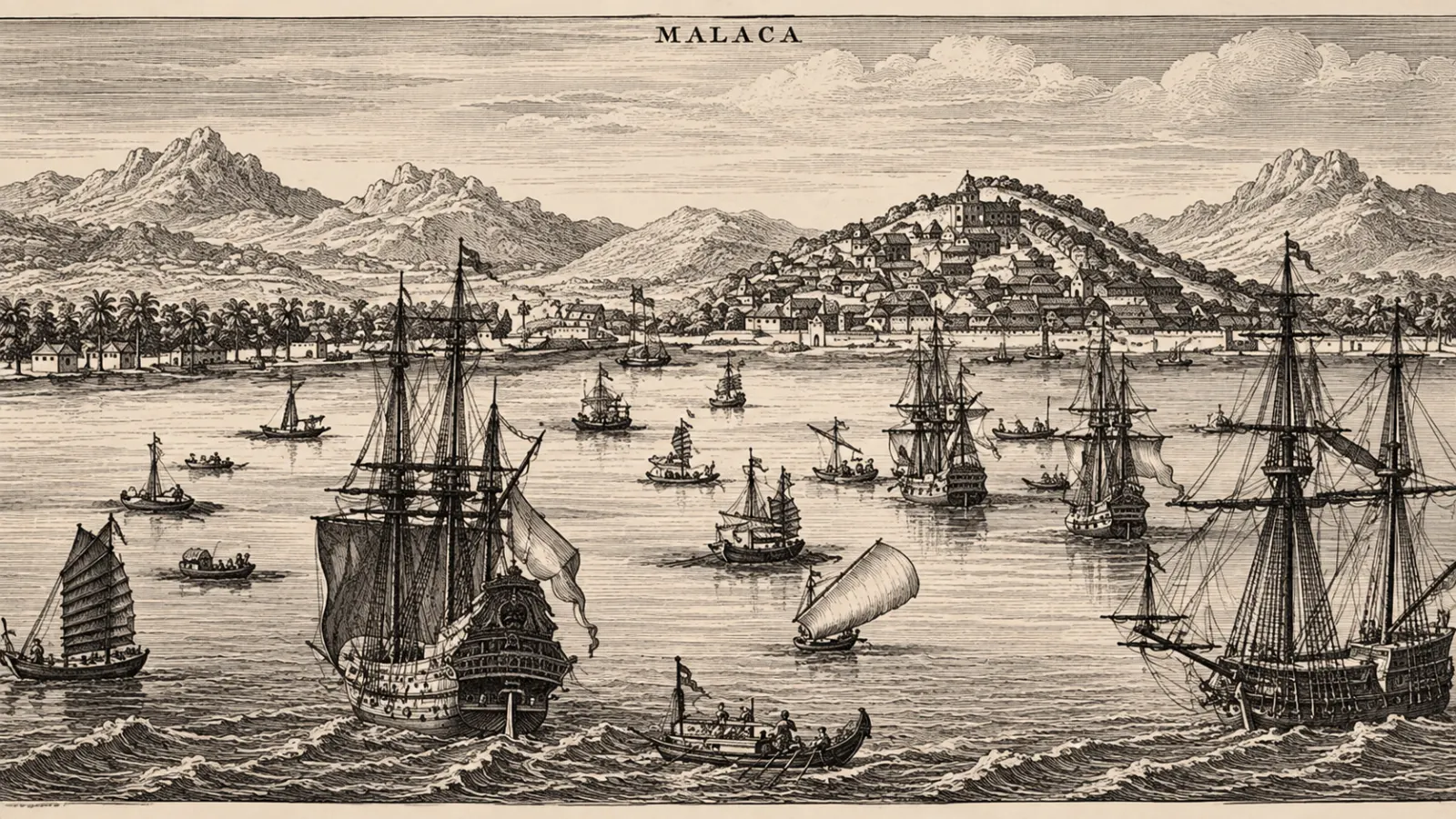
Melaka harbour, in the style of an early European engraving
Under the Melaka Sultanate
Portuguese records count between 300 and 400 Chetties in the Melaka Sultanate. One of them, Naina Chattu, held the office of Bendahara and is said to have minted the city’s first coins. Many other Chetti leaders held key positions, though their influence waned in later years.
Portuguese Melaka and after
Under the Portuguese the community lived in Campon Chelim (Kampung Keling), an affluent parish in the Tranqueira suburb that records describe as home to the “Chelis of Coromandel”. Families later moved on to Gajah Berang, Tranquerah, Bachang and Balai Panjang. Most settled in Kampung Tujuh, Gajah Berang, and became farmers.
The name Gajah Berang
One theory says Gajah Berang was first called Kanja Pidam, after Kanchipuram in Tamil Nadu, where some Chetti families may have come from. Another, noted by Janakey Raman Manickam in The Malaysian Indian, points out that “beram” means elephant in old Malay.
The community today
The community keeps the Hindu faith of its forefathers and speaks Malay mixed with Tamil words. Its families include the Pandaram, Neiker, Raja, Pather, Pillay, Chitty and Padiachee. Most families have long since lost contact with India, which is one reason the association exists.
What the association does
The association brings Melaka Chetti families together, supports members who need help and shares the community’s heritage with others.
Cohesion and cultural resilience
Helping Melaka Chettis everywhere understand and value their shared heritage as the world around them changes.
Supporting the community
Pooling our resources to fund education and welfare for members who need help.
Sharing our heritage
Working with researchers, academics and other partners so more people know about the community.
Visit Kampung Chetti
Tours are led by the community and can include a traditional meal.